
Most conversations about prior authorization focus on waiting. But many delays begin earlier, before the request ever reaches a payer, when diagnosis codes, clinical documentation, and payer-specific requirements have to line up in a single submission. In oncology, when they don’t, the consequences reach further than a denied claim.
Most conversations about prior authorization focus on waiting. Patients wait for treatment, clinic teams wait on hold, and physicians wait for decisions. But many delays begin earlier, when the treatment order, diagnosis codes, documentation, and payer-specific requirements are assembled into an authorization request.5-8
In oncology, that assembly step is not clerical. It is where clinical documentation, coding specificity, payer policy, and medical necessity must line up before a request can move forward. When they do not, the result is often rework, appeal activity, delayed care, and preventable strain on revenue cycle teams.
That is where the real problem lives. And it is a problem that Grace Schmidt understands very well.
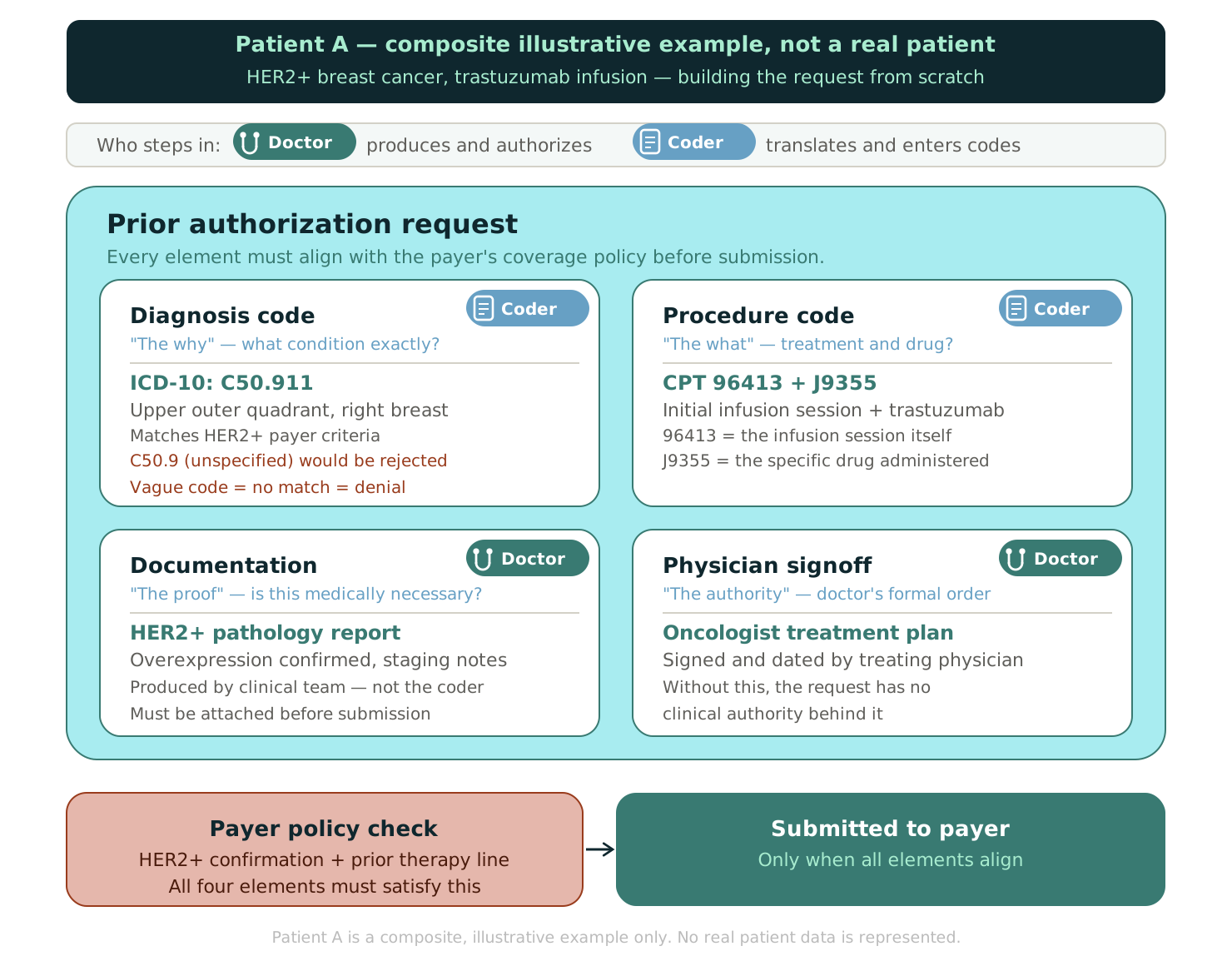
Before a prior authorization request ever reaches a payer, a coder has already made a series of decisions. Which ICD-10 diagnosis code best represents the patient’s condition? Which CPT code accurately describes the procedure? Do those codes align under the payer’s coverage policy for this patient’s plan? Does the documentation in the chart support the medical necessity justification that is about to be submitted?5,6
Each of those decisions is a potential point of failure.
Payers and clearinghouses use automated edits, coverage logic, and utilization management criteria to screen requests and claims. When diagnosis, procedure, documentation, or medical necessity elements do not align, the request may be delayed, denied, or routed into manual review, and the clock restarts.6-8
ICD diagnosis codes explain the “why” behind medical treatment. CPT and HCPCS codes describe the “what”, the service, drug, procedure, supply, or administration being requested or billed. For prior authorization, those codes must align with payer policy and be supported by documentation that demonstrates medical necessity.5-7. If a code is vague or does not match the policy, it will not go through the system. In oncology, where treatments are expensive and time-sensitive, that delay is more than an administrative inconvenience. It’s an avoidable clinical risk.5-4
The data show why this matters. In the AMA’s 2024 physician survey, practices completed an average of 39 prior authorizations per physician per week and spent 13 hours weekly on the process.1 Ninety-three percent of physicians reported care delays, and 82% reported that prior authorization can at least sometimes lead to treatment abandonment.
The oncology-specific evidence is even more concerning. ASTRO’s 2024 survey found that 92% of radiation oncologists reported treatment delays, 82% reported using less optimal treatment than originally prescribed, and 30% reported adverse events tied to prior authorization.2
A separate report found that 85% of cancer patients faced prior authorization requirements for their treatments, with employer-sponsored insurance associated with the highest administrative burdens and the most frequently reported negative effects.4-9
The volume is not the only problem. Studies have repeatedly shown that a substantial share of these denials are overturned on appeal, including 58.2% of initially denied imaging orders in one surgical oncology study, and 79% of appealed denials in a study of gynecologic cancer patients. If many denied prior authorization requests are ultimately approved on appeal, the process may be creating avoidable administrative burden rather than preventing inappropriate care.3
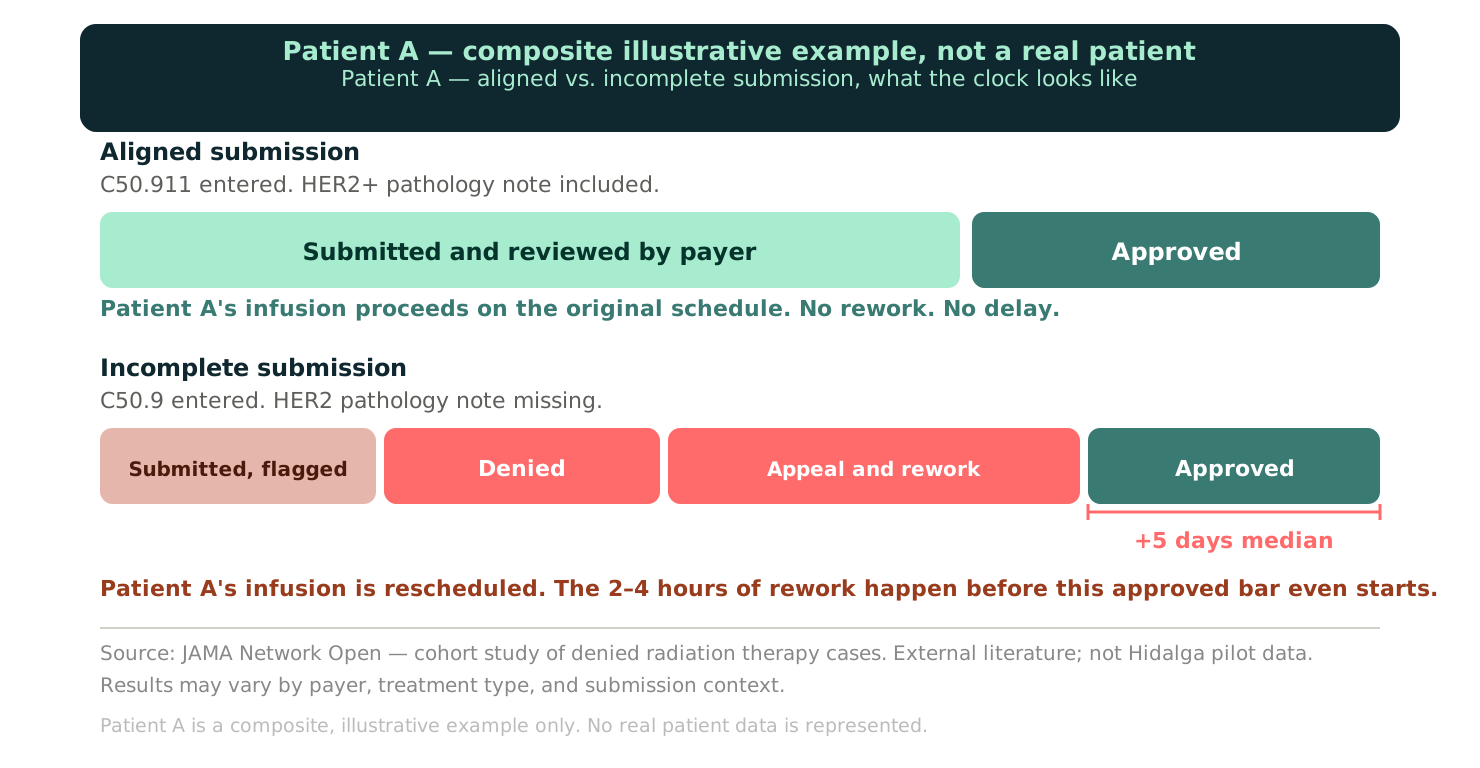
A JAMA Network Open cohort study of 206 denied radiation therapy cases found that 61.7% were ultimately authorized without treatment plan changes, while 27.2% were authorized only after payer-requested changes. Among patients who received treatment, 34.9% experienced delays, with a median delay of 5 days.3
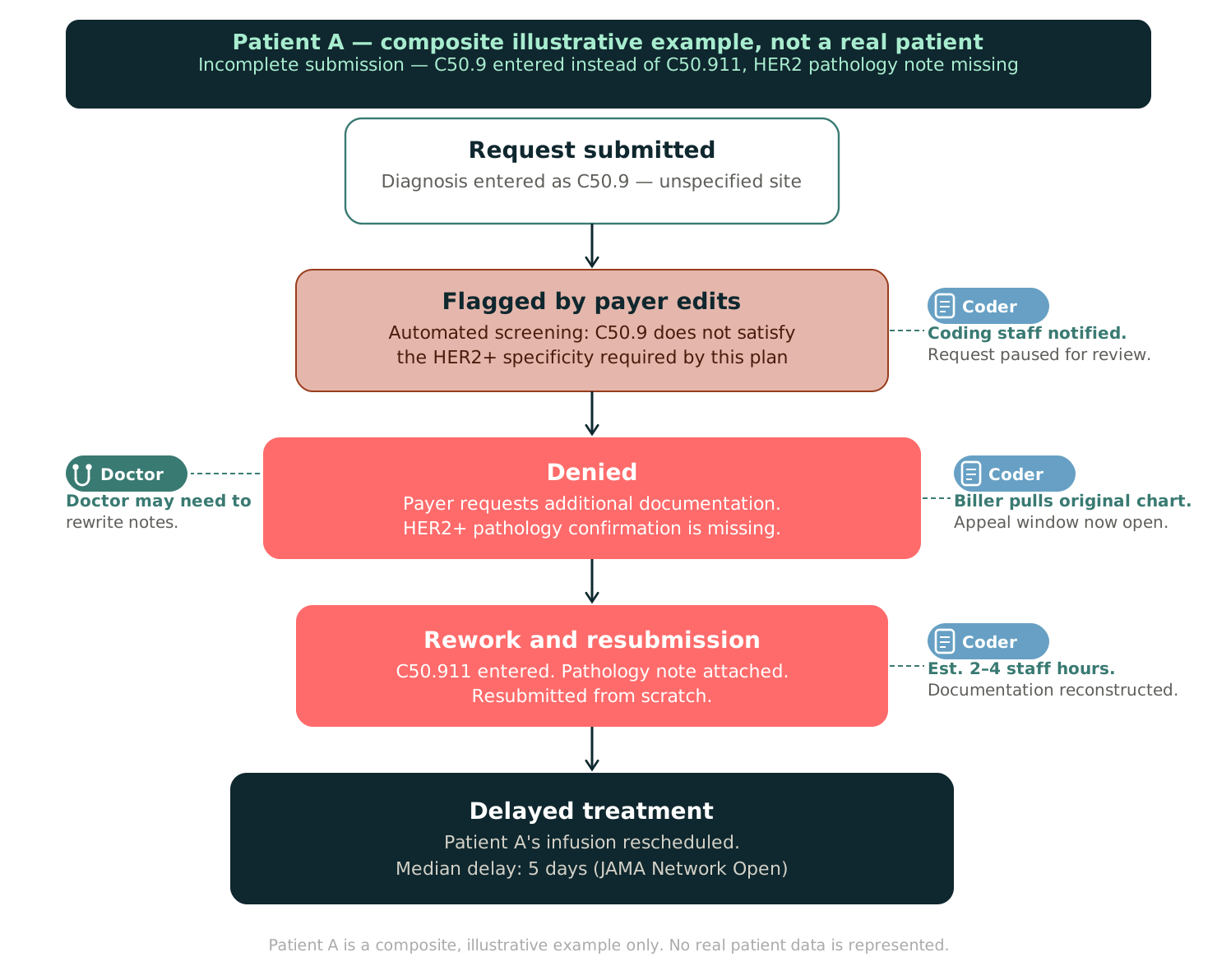
Efficient management of prior authorizations requires precise communication, thorough documentation, and detailed knowledge of payer requirements. Failure to navigate the process correctly leads to claim denials, payment delays, and increased administrative burden.5-8
The phrase “thorough documentation” does not always mean more paper. It means the right paper, structured the right way, with diagnosis codes that reflect the full clinical picture at the required level of specificity. Each CPT code reported on a claim must be linked to a specific ICD-10 code that supports the medical necessity of the service.5.6 An incorrect link can cause a claim to be denied or trigger a focused medical review.6-11
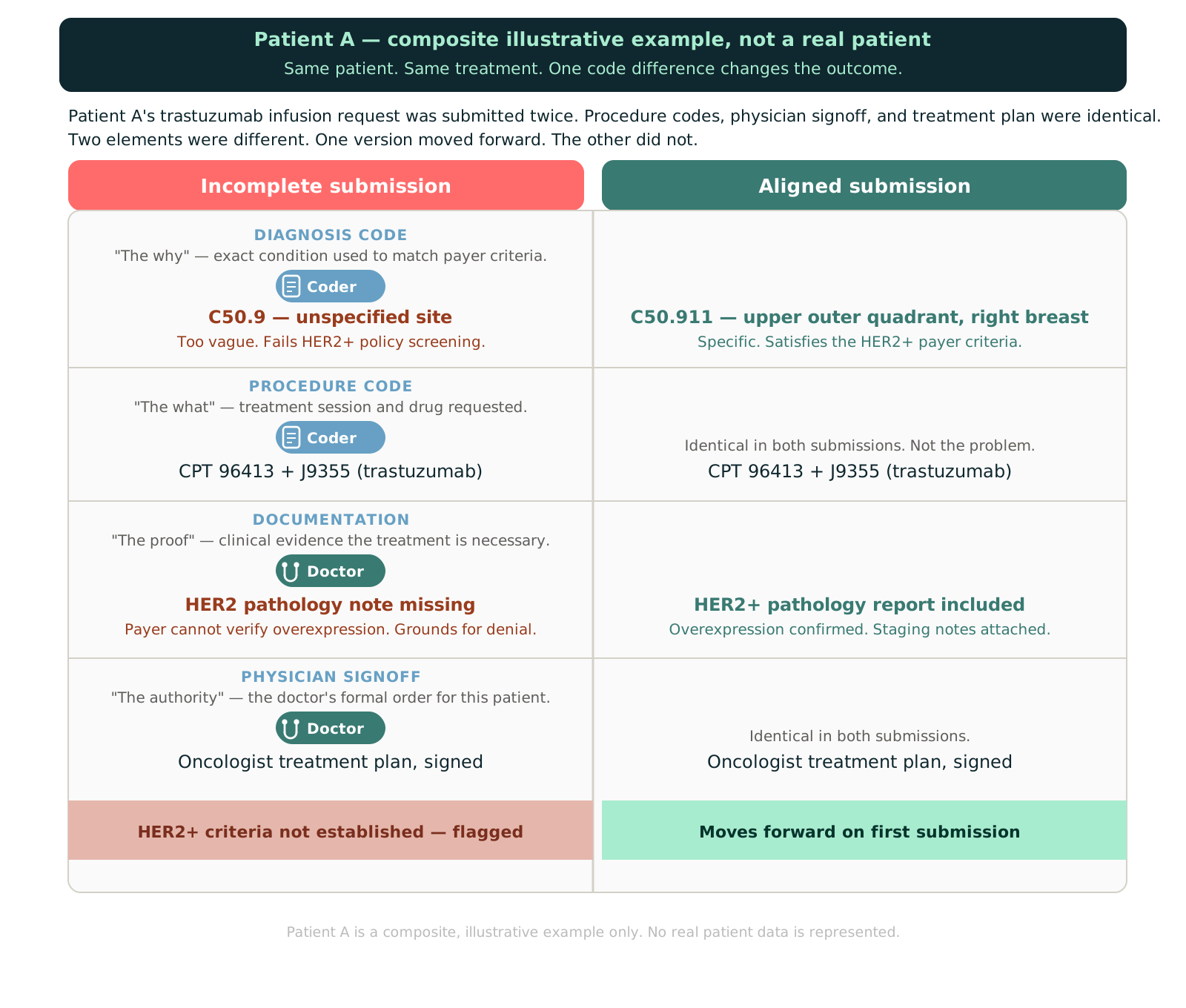
This is where billing and coding expertise intersect with clinical operations in a way that most practice administrators and software vendors underestimate. Getting a prior authorization approved on the first submission is both a workflow problem and a documentation accuracy problem.
Grace is our Clinical Market Engagement Analytics Manager at Hidalga Technologies. She holds a Medical Billing and Coding certificate, BS in Computer Science, and is earning an MS in Data Science. She is working as a Healthcare Tax Data Scientist at HCA Healthcare, where she worked inside the financial systems that show what coding decisions look like at scale: how revenue flows across service lines, how denial rates aggregate into reportable financial exposure, and how administrative decisions at the front desk eventually show up in a health system’s books.
Her work focuses on translating prior authorization friction into measurable workflow signals: where documentation gaps appear, where coding mismatches increase risk, which payer patterns drive rework, and how those issues affect staff time and revenue predictability.
That perspective matters because prior authorization is not just a front-desk task. It sits at the intersection of clinical documentation, coding specificity, payer policy, appeal workflows, and financial reporting.
Hidalga Technologies is building the analytical infrastructure to surface that exposure before it becomes a denial. hidalga HaloPA, our prior authorization workflow optimization module, is designed to help clinic teams identify missing documentation, align diagnosis and procedure information with payer requirements, and prepare more complete prior authorization submissions before they leave the clinic. The goal is not to replace coders, billers, or clinicians. The goal is to give them better visibility earlier, so preventable rework can be caught before it becomes a denial.
Practices that internally track payer-specific approval rates, denial patterns, and turnaround times can build actionable data that allow them to tailor workflows, anticipate friction points, and optimize staffing and escalation pathways.10 That kind of analysis requires clear understanding of what the data represents.
Prior authorization has many pitfalls, be it medical coding, documentation, or financial reporting. The practices that solve it fastest are the ones who understand it that way.
Contact us to learn more about how hidalga HaloPA approaches prior authorization from the ground up.
Elizabeth “Grace” Schmidt, MS Data Analytics, BS Computer Science, Medical Billing and Coding Certificate
Clinical Market Engagement Analytics Manager, Software Engineer, Hidalga Technologies, Inc.
Joshua Upshaw, PhD
Co-Founder, CEO, Principal Investigator, Hidalga Technologies, Inc.
This article is published by Hidalga Technologies, Inc., an Arkansas based healthcare science and technology company building intelligent, clinically aligned workflow optimization systems for specialty medical practices.
© 2026 Hidalga Technologies, Inc. All rights reserved.
Reproduction or redistribution of this content without written permission is prohibited. For reprint or citation inquiries, contact@hidalgatech.com.
Hidalga Technologies provides administrative support tools only. Our products do not offer direct clinical recommendations or medical advice. All clinical decisions remain the responsibility of the treating provider. Metrics presented are based on preliminary pilot data tests and may vary by clinic and implementation.

You must be logged in to post a comment.