
At Hidalga, we build technology that targets real problems in healthcare delivery that affect clinicians, administrators, and patients alike. Each quarter, our team reflects on the work they’ve done, extracts insights, and re-aligns priorities through what we call ROCK reports: Results, Opportunities, Challenges, and Key Learnings. This quarter, ROCK reports from Gavin, Grace, and Conley offered a powerful snapshot […]
At Hidalga, we build technology that targets real problems in healthcare delivery that affect clinicians, administrators, and patients alike. Each quarter, our team reflects on the work they’ve done, extracts insights, and re-aligns priorities through what we call ROCK reports: Results, Opportunities, Challenges, and Key Learnings. This quarter, ROCK reports from Gavin, Grace, and Conley offered a powerful snapshot of where we are today, and where we’re heading tomorrow.
One of the persistent challenges in healthcare is the sheer complexity of insurance payer policies. Too often, clinicians and staff navigate a maze of disparate documents that vary by plan, state, coverage type, and, frustratingly, by how frequently they change. Without structure, this information becomes noise rather than insight.
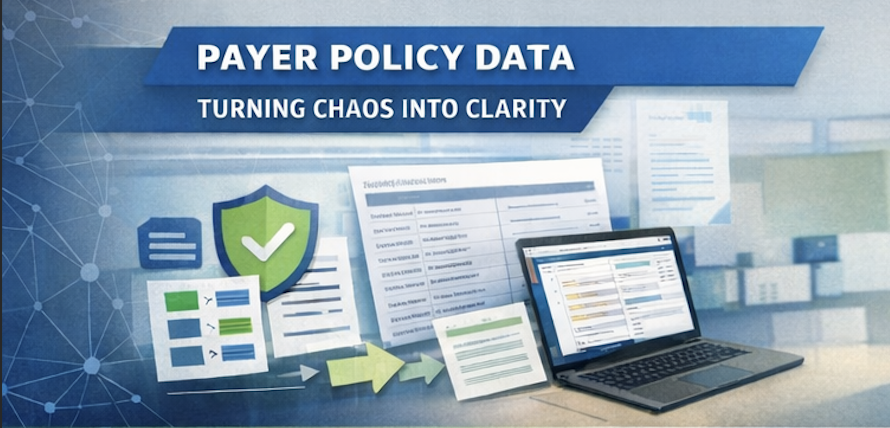
That’s where Gavin Kyer’s work on the payer policy library makes a difference. His goal was deceptively simple: generate a sprawling body of payer policy information and turn it into something accessible.
Instead of a pile of PDFs and dense legal text, our Clinical Outreach Coordinator built a structured spreadsheet of policy entries that can be filtered by insurer, state, coverage nuance, and effective or last-updated dates. Gavin created a library to store raw data, and enhance it with metadata like “friction flags” and normalizes legal and medical jargon into a dictionary that non-experts can understand.
What does this mean for clinic teams? It means someone no longer has to sift through claim rules line by line to understand whether a specific chemotherapy infusion, iron supplement, or PET scan is covered in Texas versus Arkansas. It means a system that flags outdated policies, highlights critical condition justification strategies for rapid approval, and lays groundwork for predictive modeling rather than manual lookups.
This is foundational work. It’s transformative if your workflows (and patients) lives or dies on the latest payer requirement.
Operational excellence isn’t just about internal tools, it’s also about how we show up in the broader ecosystem. That’s where, Grace Schmidt’s work on our marketing strategy becomes essential.
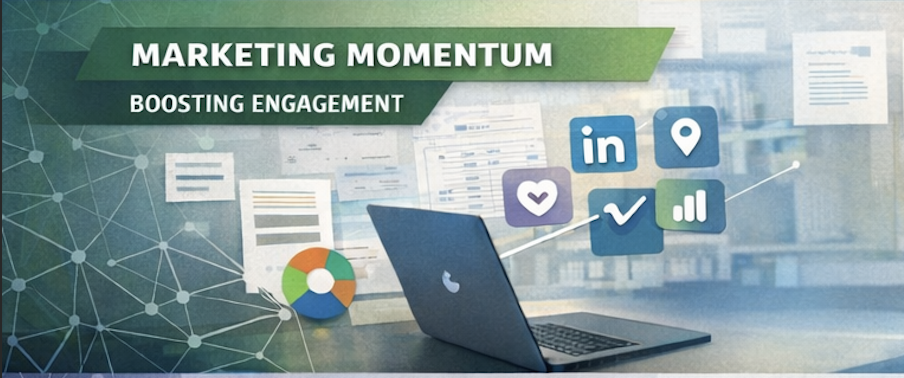
At the beginning of the quarter, company content efforts were earnest but scattered with manual posting to multiple platforms, inconsistent message structure, and little data to tell us what was working. Our Social Media Marketing Manager’s chronicles that evolution from ad-hoc activity to a scalable, documented, and automated content system.
By adopting automation tools like Loomly for automated scheduling and analytics, Canva for consistent visuals, and a central Microsoft Planner for internal governance and KPI tracking, Grace helped the team move beyond repetitive manual posting. More importantly, her analysis identified that our team- and culture-driven content, alongside industry insights, generated the highest engagement. In December, LinkedIn engagement surpassed the target 10% mark, offering real evidence that the strategy was working.
Why does this matter? Marketing isn’t noise when it reliably connects with real audiences. By understanding what resonates, and by tracking it with data instead of instinct, we’re creating a foundation to amplify hidalga’s mission, not just our logo.
If policy structure is the skeleton and marketing strategy is the voice, then data analysis is the muscle that moves the system. That’s where Conley Price’s deep dive into prior authorization utilization review data plays a crucial role.
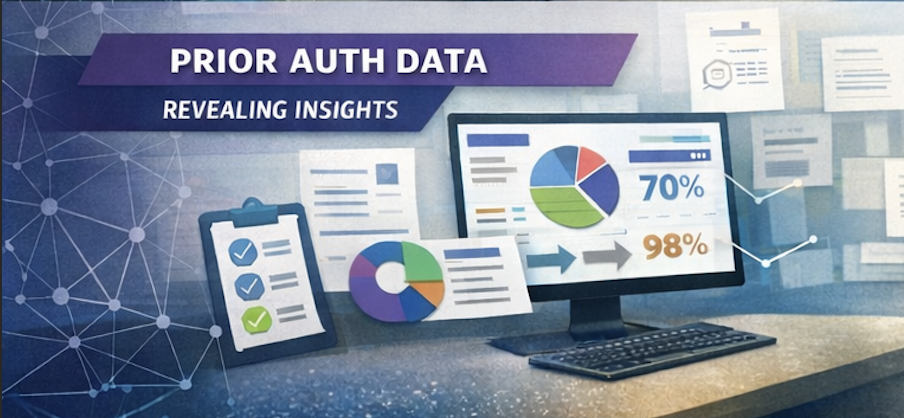
Rather than stopping at surface metrics, our Data Analyst explored real prior auth approval and denial patterns across multiple payer groups and LOBs, from Medicare Advantage and Blue Cross Blue Shield variations to Arkansas Medicaid and Cigna. What emerged was an eye-opening picture of how approval rates vary widely, from 70% to 98%, and how denial drivers differ by service type and administrative labeling.
In some datasets, administrative glitches, missing documentation, or policy changes during the filing process contributed to denials. Other payers, like Medicaid, presented particularly high denial rates, often tied to frequent quarterly criteria updates. In oncology-specific fields, nuanced differences in how services are categorized also influenced outcomes.
Conley’s work underscored two critical insights:
This has direct implications for how we’re approaching model design. A binary classification system that understands specialty type, service category, and coverage rules is necessary, but it needs rich, reliable data to train on.
Taken together, these reports are strategic inputs that inform how we build:
These efforts reflect our commitment to solving real workflows in oncology clinics, helping clinics approve care faster, reduce burnout, and focus on what matters most: the patient.
As we move into the next quarter for a new year, these insights will shape enhancements in our product, deepen engagement with our community, and continue alignment of what we measure with what genuinely matters.
Authorship & Copyright
Joshua Upshaw, PhD
Co-Founder, CEO, PrincipalI | Hidalga Technologies, Inc.
Elizabeth Grace Schmidt, MCS
Software Engineer, Medical Coder, Marketing Lead | Hidalga Technologies, Inc.
Conley Price
Data Analyst Intern | Hidalga Technologies, Inc.
Gavin Kyer
Clinical Outreach Coordinator | Hidalga Technologies, Inc.
This article is published by Hidalga Technologies, Inc., an Arkansas based healthcare science and technology company building intelligent, clinically aligned workflow optimization systems for specialty medical practices.
© 2026 Hidalga Technologies, Inc. All rights reserved.
Reproduction or redistribution of this content without written permission is prohibited. For reprint or citation inquiries, contact@hidalgatech.com.

You must be logged in to post a comment.